

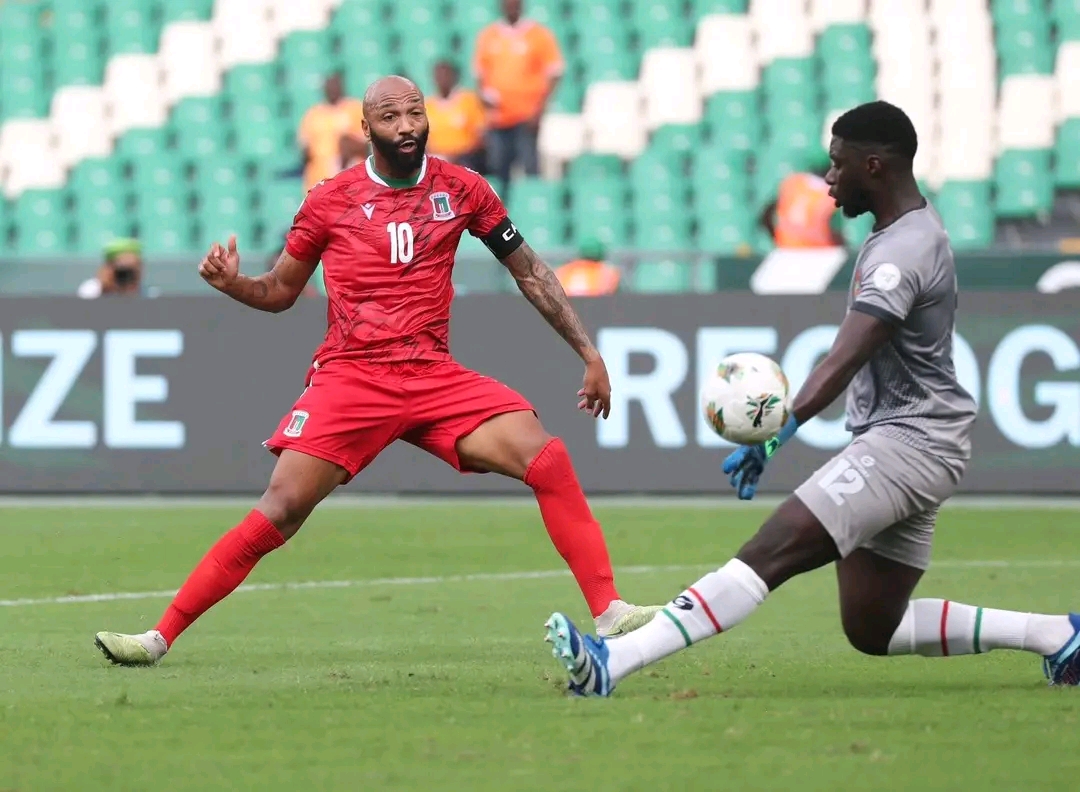
NATURALISATION FC: How Equatorial Guinea Turned Citizenship Into a Football Strategy
The Naturalisation Experiment – 12 Years of Equatorial Guinea at AFCON
When ESPN wrote in May 2014 that “not everyone who plays for Equatorial Guinea is from there or even has their heritage in the country, the region and in some cases, even the continent. To date, 21 Brazilians, 14 Cameroonians, four Senegalese, three Colombians, two Ghanaians, two Ivorians, two Nigerians, one Liberian and two Spaniards have played for Equatorial Guinea as they took naturalisation to a new level,” Equatorial Guinea was already the most extreme experiment in international football. Twelve years and four Africa Cup of Nations later, that experiment has become the definitive case study.
Part I: How It Started – Oil, Money and Brazilians
It began with oil. In the mid-2000s, Equatorial Guinea’s economy grew 30% per year. It had Africa’s highest GDP per capita, but the wealth stayed with the elite.
One elite was the president’s son, who loved football. In late 2005 he told Brazilian coach Antonio Dumas: find me players in Brazil.
Striker Andre Neles, who played 6 games for them, said he got $200,000 to agree to be naturalised and $10,000 per game.
Cameroon became the other supplier. Richard Ambassa, a hotel gardener by day trying to make it as a footballer in Malabo, told Radio Netherlands he earned $98-$390 a month – more than at home.
By AFCON 2012, which they co-hosted, they fielded 11 non-nationals at once. Zambia’s coach Herve Renard protested. After losing 0-4 to DR Congo in a 2013 AFCON qualifier, they recruited nine Brazilians for the second leg. They won 2-1 but still went out. DR Congo’s Claude Le Roy called them the United Nations of football.
Coach Henri Michel resigned twice over external interference. Even captain Juvenal Edjogo, born in Sabadell, Spain to an Equatoguinean father, said he would rather lose by three or even four goals but have most of the players from the same country.
The Brazilian route was eventually blocked by FIFA. So they found a legal route: Spain. As a former Spanish colony until 1968, thousands of Equatoguineans live in Spain. Spanish-born children or grandchildren can claim citizenship.
Part II: The Three AFCON Squads – The Evolution
AFCON 2015 – The Hosts Who Weren’t Supposed To Be There
Equatorial Guinea had been expelled from the qualifiers for fielding ineligible Cameroonian Thierry Fidieu. When Morocco pulled out over Ebola, they were reinstated as hosts. Argentine Esteban Becker had 2 months.
23 players: Felipe Ovono, Carlos Mosibe [LOCAL], Aitor Embela [Born Figueres, Spain]; Dani Evuy, Diosdado Mbele [LOCAL], Igor Engonga [Grandson of Vicente Engonga], Rui Da Gracia Gomes [Born Bissau], Sipo Bohale, Miguel Angel Maye [LOCAL]; Juvenal Edjogo-Owono [Sabadell – Captain], Emilio Nsue, Iban Salvador Edu, Ivan Zarandona, Pablo Ganet, Charly, Viera Ellong Doualla [LOCAL], Randy; Javier Balboa [Madrid – Real Madrid academy – STAR with 3 goals], Ruben Belima, Ivan Bolado, Raul Fabiani, Kike Boula, Ruben Dario [LOCAL].[Madrid][Alicante][Palma][Hospitalet]
Origin: ∼14 born in Spain, 6 local league, 3 naturalised.
Result: 4th Place.
The Gap: 2017 and 2019 – Failed To Qualify
Without automatic hosting, the model failed.
AFCON 2021 [Played Jan 2022] – First Real Qualification
For the first time, they qualified on the pitch. Coach Juan Micha Obiang, first local coach at AFCON.
28 players: Jesus Owono [Bata, raised Basque Country], Sapunga [LOCAL], Aitor Mbela Gil, Mariano Mba [LOCAL]; Carlos Akapo Martinez, Saul Coco, Marvin Anieboh, Meseguer, Belima, Esteban Obiang, Basilio Ndong, Cosme Anvene [LOCAL], Maye [LOCAL], Luis Enrique Nsue [LOCAL]; Javier Akapo, Bikoro [Douala, raised EQG], Santiago Eneme, Alex Balboa, Dorian Hanza, Pepin Machin, Pablo Ganet, Jannick Buyla; Nlavo Asue, Siafa, Iban Salvador, Emilio Nsue, Josete Miranda, Pedro Oba Asu [LOCAL].[Elche][Lanzarote][Madrid][Mbini][Malabo][Bata][Getafe]
Origin: 16 Spanish-born, 7 local league, 5 other diaspora.
Result: Quarter-Final. Beat Algeria 1-0 [ended 35-game unbeaten run], beat Mali on pens.
AFCON 2025 [Played Dec 2025] – The Global Diaspora
Most international squad ever. Only 1 local league player left.
27 players: Jesus Owono [FC Andorra], Sapunga [Sekhukhune United], Embela ; Orozco Fernandez, Anieboh, Akapo [Amazonas Brazil], Coco [Torino Serie A], Ndong, Ngaah, Senra [Seville – mother EQG], Charles Ondo, Muma Boho [EQG]; Mascarell, Ganet [Murcia/Indonesia], Balboa, Masogo, Machin, Pedro Obiang [Alcala – Monza Serie A], Eneme [Malabo – Sparta Prague], Buyla; Iban Salvador, Josete Miranda, Akogo, Nabil Ondo, Luismi Nlavo [Malabo – Shanghai Shenhua China], Dorian Hanza, Loren Zuniga [Fuerteventura – Real Madrid Castilla], Emilio Nsue [Palma – 36 years old].[Soneja][Madrid][Mbini][Tenerife][Netherlands][Bata][Poland][Greece][Denmark]
Result: Group Stage disaster. 0 points. Lost 1-2 Burkina Faso, 0-1 Sudan, 1-3 Algeria. First time failing to pass group stage.
Part III: The Reckoning – The Nsue Ruling
The experiment finally caught up with them. In 2024, FIFA ruled that Emilio Nsue, the top scorer at AFCON 2023 with 5 goals against Guinea-Bissau and Ivory Coast and Golden Boot winner, was never eligible to play for Equatorial Guinea throughout his entire 11-year international career.
The judgment was based on Nsue having played competitive matches for Spain’s youth teams before featuring for Equatorial Guinea’s senior side without ever being granted permission for a change of association.
The sanctions:
- Nsue banned from international football for six months
- Feguifut fined 150,000 Swiss francs (£131,000)
- Equatorial Guinea stripped of their World Cup 2026 qualification victories against Namibia and Liberia, both 1-0 wins courtesy of Nsue goals, with opponents awarded 3-0 wins.
It was the third major FIFA sanction in their naturalisation history: 2013 vs DR Congo with 9 Brazilians, 2014 expulsion for Cameroonian Thierry Fidieu, and now 2024 for their all-time top scorer.
Conclusion: Impact of Naturalisation
Equatorial Guinea is the perfect case study because it shows both extremes.
What naturalisation gave them:
- Existence: Without it, a country with one stadium for six teams in 2012 never plays 5 AFCONs.
- Moneyball effect: For $200,000 per Brazilian or a Spanish passport, you buy a national team cheaper than building academies. FIFA ranking went from 195 to 49.
- Identity shift: The women’s team won 2 African titles the same way.
What it took away:
- Legitimacy: Three sanctions culminating in the Nsue case – losing a Golden Boot, World Cup points, and 11 years of history.
- Local development: In 2015, 6 locals were in squad. In 2025, 1. The $1.56 million invested in 2012 to give each of the 12 teams a stadium, accommodation and health insurance did not produce one starter for 2025.
- Ceiling: As Juvenal said in 2014, I would rather lose by three or even four goals but have most players from the same country. When the diaspora plays in 4th division Spain, Indonesia and China’s second league, as in 2025, you lose anyway – but without local pride.
Goikoetxea’s task in 2014 was to establish unity among players who didn’t share heritage, region or continent. Juan Micha, a decade later, has the same task, but now unity must be between Madrid-born kids who choose Equatorial Guinea because Spain won’t pick them, and locals who will never be picked.
Equatorial Guinea proved that you can naturalise a team to the quarter-finals. It has not yet proven you can naturalise a football nation.